 HackerFeel // Dashboard Open Terminal →
 Cyber Dispatch // Guide
Top 10 Hacker Movies of All Time & The Tools They Showed
Cinema has always had an obsession with hackers. From dark basements illuminated only by CRT monitors to high-tech covert operatives bypassing global satellite links, hacker films shaped how a generation views technology and cybersecurity.
While some movies gave us laughable visual tropes—like 3D cubes spinning through cyberspace or two people typing furiously on a single keyboard—several productions took the time to consult real security researchers and feature authentic, syntactically correct tools and exploits.
Here are the Top 10 hacker movies and shows of all time, complete with their official IMDb ratings, Rotten Tomatoes scores, and a breakdown of the real-world cybersecurity tools they showcased.
1. The Matrix (1999)
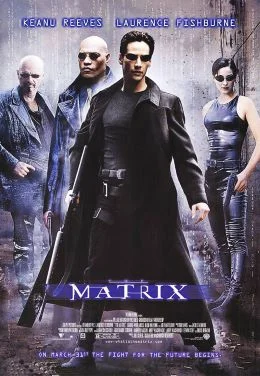
- The Scene: Trinity hacks into a power plant substation to cut the electrical grid before Neo enters the building.
- The Real Tool Featured: Nmap (Network Mapper) and CRC32 SSH Exploit.
The Matrix is widely celebrated by cybersecurity engineers for displaying one of the first 100% authentic hacks in cinema history. Rather than inventing fictional flashing sci-fi graphics, the directors showed Trinity running an authentic nmap -v -sS -O 10.2.2.2 command to scan for open ports. Finding an unpatched SSH daemon on port 22, she deployed a known real-world buffer overflow exploit (SSH1 CRC32) to reset the root administrator password.
2. Mr. Robot (2015–2019)

- The Scene: Elliot Alderson hacking everything from prison security doors and smart homes to multinational conglomerate E Corp.
- The Real Tool Featured: Kali Linux, Metasploit, Raspberry Pi, Social Engineering Toolkit (SET), ProtonMail.
Though a television series, no list of cinematic hacking is complete without Mr. Robot. Under the guidance of technical advisors, nearly every terminal command typed by Elliot is syntactically accurate. The series showcases real Kali Linux environments, wireless packet injection (airmon-ng), Bluetooth hijacking, and hardware implants like compromised Raspberry Pi units spliced into HVAC systems.
Want to test a Kali-style screen in your browser? Launch the HackerFeel Kali Linux Simulator to experience simulated terminal scanning panels and network visuals.
3. Sneakers (1992)
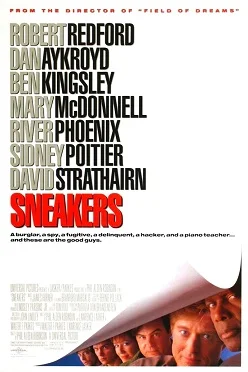
- The Scene: Robert Redford and his team of ethical penetration testers infiltrating banks and defense contractors.
- The Real Tool Featured: Wardialing, Social Engineering, Audio Signal Reconnaissance.
Decades ahead of its time, Sneakers portrayed ethical hackers (pen-testers) long before the term entered mainstream culture. The film focuses heavily on human psychology: pretexting phone operators, recording audio frequencies of voice locks, and brute-force telephone wardialing.
4. WarGames (1983)
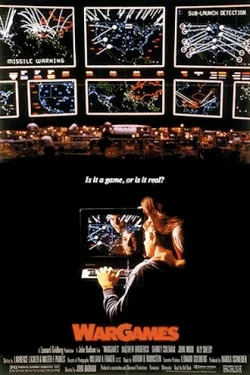
- The Scene: High school student David Lightman accidentally dials into the Pentagon’s nuclear supercomputer, WOPR.
- The Real Tool Featured: Acoustic Coupler Modem, Wardialing, IMSAI 8080.
WarGames is responsible for popularizing the concept of computer security with the general public. Lightman’s computer setup features a real IMSAI 8080 microcomputer and an acoustic coupler modem. He dials every telephone exchange in Sunnyvale, California searching for computers responding with carrier tones—the exact origin of the term “wardialing.”
5. Hackers (1995)
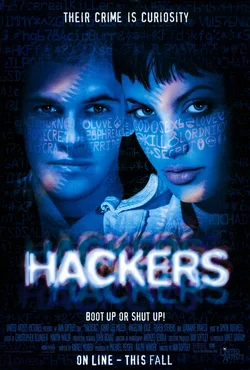
- The Scene: Zero Cool, Acid Burn, and Crash Overide battling the villainous “Plague” inside the Gibson supercomputer.
- The Real Tool Featured: Phreaking, Payphone Red Boxes, Unix Shell Commands.
Hackers is pure, unapologetic 90s cyberpunk style. While its 3D architectural cityscapes representing mainframe file structures are complete cinematic fantasy, the movie accurately captured the era’s subculture: payphone phreaking using cassette audio tones (Red Boxing), dumpster diving for discarded employee manuals, and rollerblading through NYC.
6. Blackhat (2015)
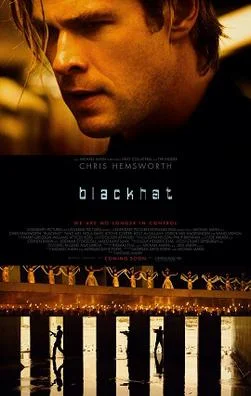
- The Scene: Convicted hacker Nicholas Hathaway tracking malware responsible for exploding nuclear plant turbines.
- The Real Tool Featured: PLC / SCADA exploits (Stuxnet style), command-line shells, GDB debugging.
Directed by Michael Mann, Blackhat avoids flashy 3D gimmicks. Characters interact with computers through raw command-line consoles, disassembling binary code, investigating memory dumps, and tracking USB-delivered malware designed to compromise physical programmable logic controllers (PLCs).
7. The Girl with the Dragon Tattoo (2011)

- The Scene: Lisbeth Salander investigating corporate corruption and cold cases from her laptop.
- The Real Tool Featured: Mac OS X Terminal, SQL Injections, Keyloggers, Encrypted PGP partitions.
David Fincher’s adaptation accurately displays Lisbeth Salander using lightweight command-line utilities, decrypting local drive backups, and conducting OSINT (Open Source Intelligence) investigations across municipal databases without magic graphics.
8. Who Am I – No System Is Safe (2014)
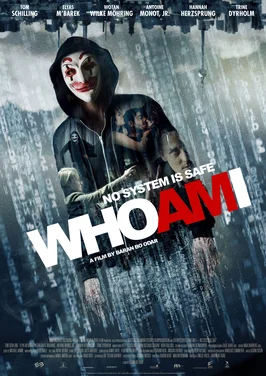
- The Scene: A rogue German hacker collective called CLAY pulling off audaciously public pranks and dark web attacks.
- The Real Tool Featured: Social engineering, IRC communication, Trojan droppers.
This stylish German thriller presents hacking through a psychological lens. Instead of showing people staring at screens for two hours, the film depicts dark web underground chats as a mysterious subway car where masked hackers meet. Behind the metaphor, the attack vectors—phishing receptionist emails, leaving infected flash drives—are spot on.
9. Swordfish (2001)
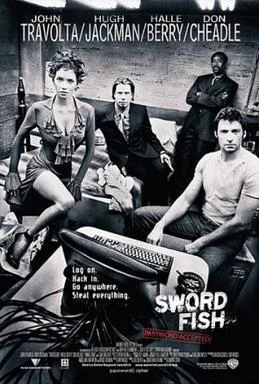
- The Scene: Hugh Jackman building a multi-headed encryption hydra algorithm in under 60 seconds.
- The Real Tool Featured: Multi-monitor visual workspace, Assembly code compilation.
Swordfish represents the absolute peak of “Hollywood fast typing.” Surrounded by curved multi-monitor workstations, the character generates thousands of lines of visual algorithms with pounding techno music in the background. While mathematically exaggerated, it created the timeless fantasy that typing furiously on a terminal looks breathtakingly cool.
10. TRON: Legacy (2010)
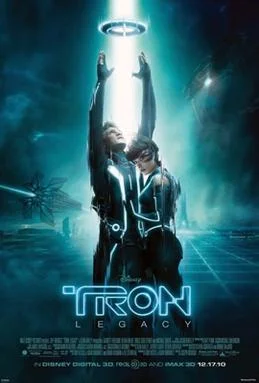
- The Scene: Flynn breaking into the ENCOM headquarters mainframe.
- The Real Tool Featured: Authentic Unix commands:
whoami,kill -9, top process trees.
In TRON: Legacy, when Sam Flynn accesses his father’s hidden basement terminal, the screen shows authentic Solaris/Unix terminal output. He runs whoami to verify root status and issues kill -9 to terminate background server processes before being digitized into the grid.
How to Get the Movie Hacker Aesthetic on Your Own Laptop
If watching these films makes you want to sit behind a glowing monitor and type out lines of green code like Hugh Jackman in Swordfish or Trinity in The Matrix, you don’t need complex servers:
- Launch the HackerFeel Terminal Simulator in your web browser.
- Press
F11for borderless fullscreen mode. - Start typing on your keyboard—every keystroke generates cinematic, real-looking source code with mechanical sound effects and dramatic warning panels.
- Or jump into the Cyberdeck Coding Screen for multi-pane monitors and live memory graphs.
Which movie hack was your favorite? Grab a hoodie, dim the lights, and try the simulation yourself!
Try the Simulator Yourself
Experience cinematic green phosphor code generation, cyber sound effects, and secret keyboard shortcuts.